
Inside One of Michigan’s Most Demanding Snowmobile Challenges
By Kim Kisner, Contributing Writer
When they started their engines, it was 6 pm and a fairly balmy 40 degrees, the snow was wet and heavy. A few hours in, the temperature dropped by half, and the trails froze.
By then, turning back wasn’t part of the equation.
Michigan’s inaugural 1,000 Mile Snowmobile Challenge in February 2026 was not for the faint of heart – especially for the handful of riders who chose to complete it in 24 hours, rather than spread the miles across five days.
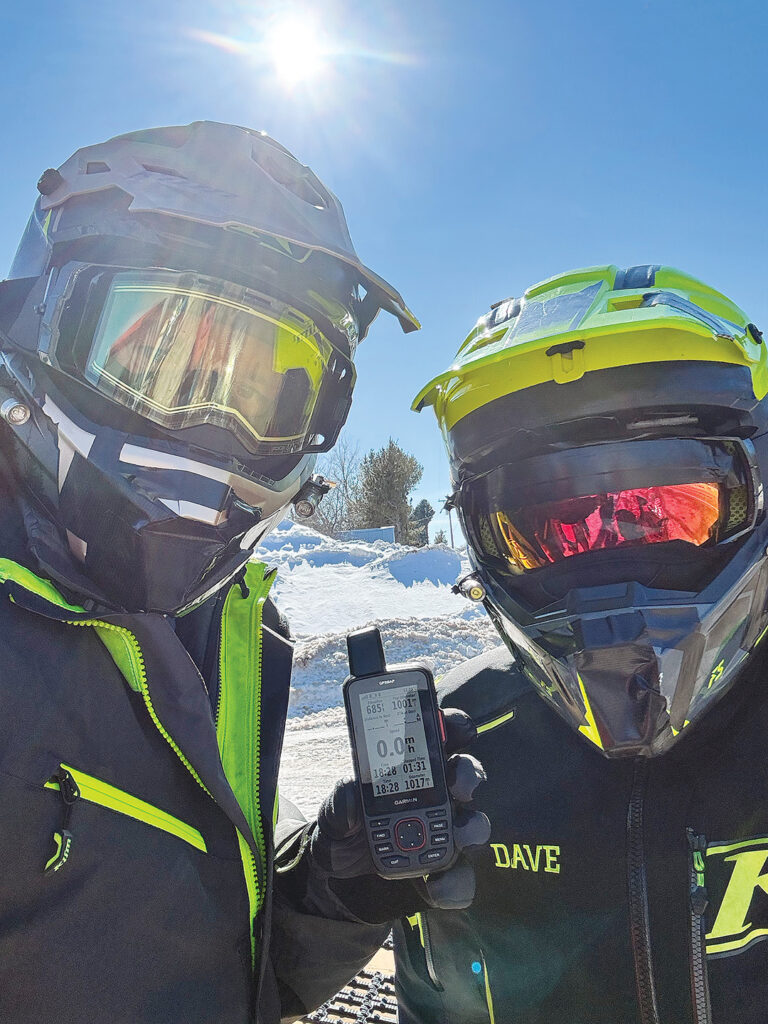
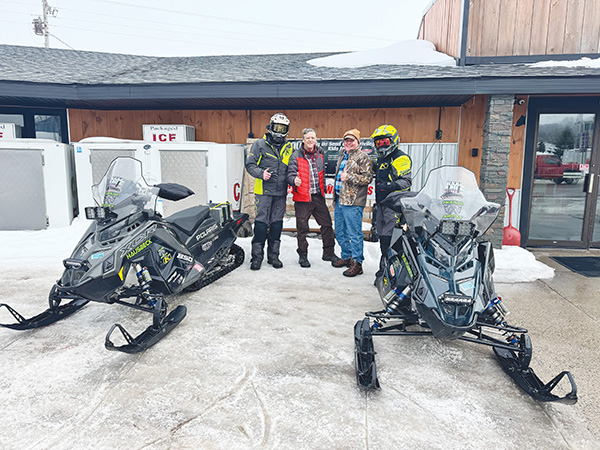
Dave Hausbeck and his nephew, Adam were among them.
It’s Not a Race
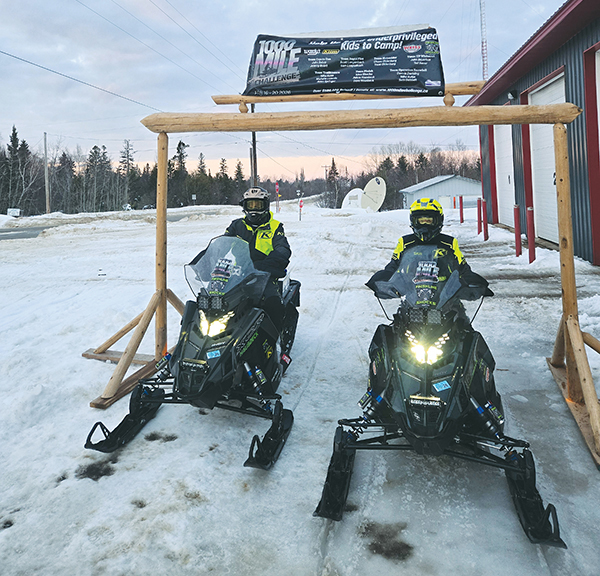
It’s not a race. It’s an endurance ride designed to test consistency as much as speed. Most teams now spread the distance across multiple days, taking in the terrain and the experience. But not Dave and Adam. They finished in 18 hours and 28 minutes.
“Our helmets came off one time – at the end,” Dave said. An appropriate anecdote, since the name of their team was Team Finish Line.
Gas stops came roughly every 100 miles. There was no lingering, no sitting, no real break in the rhythm. It was fuel, reset, and go. The goal was to keep moving.
“We didn’t talk much,” Adam said. “It was go, go, go,” Dave added.
Around 2 a.m., the fog rolled in.
Not just fog – ice fog. The kind that builds on goggles and machines, distorting visibility and forcing riders to rely on instinct and their instruments more than sight.
“For over an hour, I couldn’t see his taillight,” Adam said. “The fog turned into ice fog, and I had about a quarter inch of ice on my goggles. I was constantly scraping it off just to see anything.”
At times, the trail disappeared completely. What remained was a narrow line on a GPS screen and the assumption that the sled ahead was on the same path.
“You almost end up looking at the GPS more than the trail,” Dave said.
By that point, the physical demands had settled in. Fatigue was there, but manageable. The real challenge was mental.
“I knew I could physically do it,” Dave said. “But mentally, in that fog, it was different. Between about 4:30 and 7 in the morning was the hardest part.”
The hours before sunrise stretched. Visibility came and went in waves as the cold deepened. The trail hardened, and the margin for error narrowed.
Then the Sun Came Up
“When the sun broke, it burned the fog off,” Dave said. “That was a breath of fresh air.”
“It was by far the best part of the whole ride,” Adam added.
The change wasn’t just visual, it reset everything: focus, energy, momentum. After nearly twelve hours in the dark, the daylight brought clarity and a sense that the end, while still distant, was finally within reach.
But the Ride Never Fully Lets Up
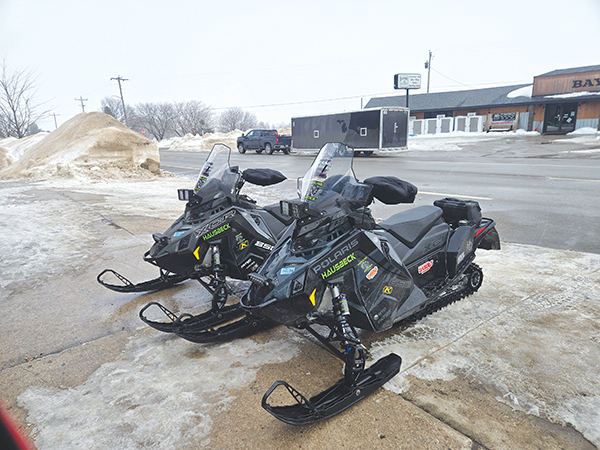
There were stretches of rough trail – up to 80 miles at a time – that forced them to stay loose and absorb constant impact. At one point, changing conditions made it difficult to keep the sleds cool, requiring them to pack snow into the cooling systems by hand. Earlier, they ran out of gas just short of a fuel stop, losing time but recovering quickly.
“Of 1,000 miles, there are 10,000 things that could go wrong,” Dave said. “But we were lucky, and we had a lot go right.”
They had prepared for it. Dave had pre-run the route, and both riders understood the terrain and the demands. Their machines held up. Their pacing stayed consistent. And perhaps most importantly, they never had to worry about each other.
With Polaris Command GPS, Dave could track Adam as a dot on the screen, moving with him along the trail.
“I never had to check if he was there,” Dave said. “He was always there.”
Adam saw it from the other side.
“I learned a lot about Dave on this ride,” he said. “He’s more than twice my age, and I look up to him. He doesn’t give up. I knew he was cold, but he’d never say it. That’s something I’ll carry with me. When I’m his age, I want to still be able to do something like this.”
There wasn’t much conversation during the ride itself. There couldn’t be. The focus required was too constant, and the conditions too variable. But the connection was there – in the pacing, in the trust, in the understanding that neither one would fall off or slow down without reason.
They finished just after noon, pulling into Grand Marais, where they had started. After nearly 19 hours on the sled, they finally stopped.
“That was nice,” Dave said, simply.
Adam was energized.
“There was the relief, but also the excitement that we did it,” he said. “You think you’re going to be exhausted, but I felt more awake than I did at five in the morning. Once you know you’re done, it’s a different kind of energy.”
What Had They Done Exactly?
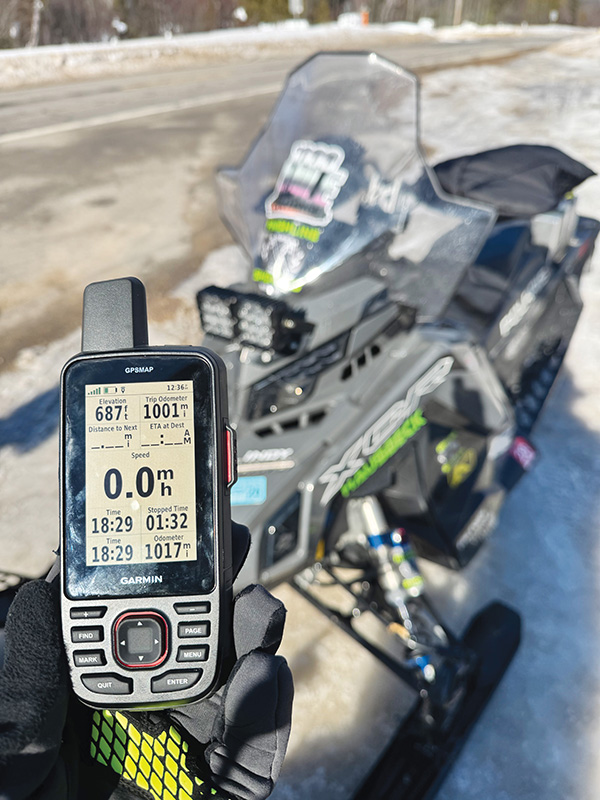
Dave explains the route: “We left from Grand Marais and headed to Marquette, then down to Manistique and over to the bridge. From there we went up to Brimley and then back to Grand Marais. That was one lap of 460 miles, so we repeated that for a second lap, leaving us 80 miles short, so we headed to Shingleton and back to Grand Marais.”
At the end, there were photos and a hug. And then, almost immediately, the conversation shifted forward.
They’ll Do It Again
At its core, the 1,000 Mile Snowmobile Challenge is about more than endurance. Every mile supports fundraising efforts to send kids to summer camp, something both Dave and Adam were quick to emphasize. Riders cover their own expenses, and every dollar raised goes directly to the program.
The Challenge officially began in New Brunswick, Canada, in 2021 as a nonprofit event founded by snowmobilers Rudi Fowler and Danny Lunn. What started as a small endurance ride has quickly grown into something much larger, with riders and supporters rallying around the cause.
Since 2021, the Challenge has raised well over half a million dollars, helping send kids to camp who otherwise wouldn’t have the opportunity. In its first year in Michigan, the Upper Peninsula event alone raised more than $36,000, all of which will stay in the state to support Michigan kids.
The impact extends far beyond the riders themselves. The 1,000 Mile Challenge has drawn more than a million fans worldwide each year, reaching audiences across more than 10 countries. Riders, supporters, and communities rally around the cause—following along, sharing in the experience, and contributing in ways both big and small.
For Dave and Adam, that support wasn’t lost on them.
They were quick to acknowledge the people who donated and backed their ride, who are listed below. Dave and Adam raised $6,500. It’s what gives the miles meaning for them – and what keeps them coming back.
For those involved, it becomes something more than a ride. It’s something people feel part of.
When asked to describe the Challenge in one word, Dave said, “Consistency.” Adam followed with “Intense.”
Different words, but the same meaning behind them. Because in the end, it’s not just about the miles – it’s the decision to keep moving, and to do it for the kids.
Riders for the 2027 event can sign up November, 2026 by going to the website, 1000milechalleng.ca. Parents, relatives, neighbors, and teachers can sign kids up for camp in April following the event. •
Team Finish Line Generous Donors:
Jim Kanine, Diesel Truck Sales
Keith and Diane Kueffner
Rob Cleary, Wieland Truck Sales
Jeff Johnson, Michigan Truck Equipment Parts
William Veit, Royal Truck Sales
Al Schlegal
Matt Spernak
Terry Beard
Don Hausbeck
Joyce Dost
Dave Houghtaling
Craig Wellman
Chris Ranney
Klim
Woody’s
Weiss Equipment
Dan Kelly
Anne and John Coursey
Deb Kinsey
Larry and Melissa Lauria
Woodruff Contracting
Mark Rhynard
Mathew Warren
Marilynn Miller
Brad Gray
Patricia Hausbeck
Megan and Troy Dewald
Bill Slaughter
Stephanie Davis
Charlie Thompson
Will Obrien
Dale Woods