
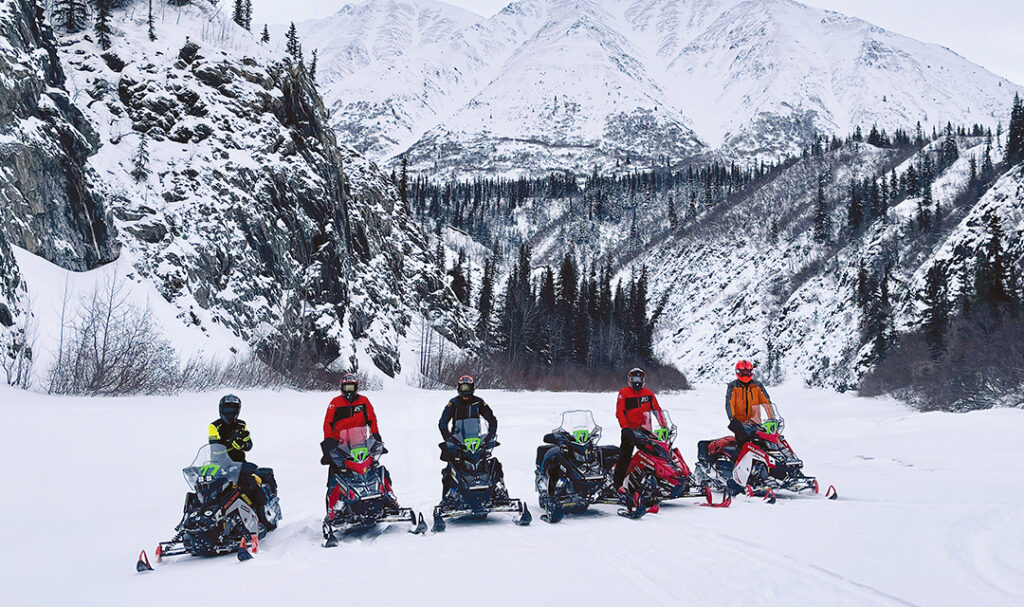
How Roger Brown found purpose in the Iron Dog community.
By Kim Kisner, Contributing Writer
In February deep, in Alaska, Roger Brown can typically be found doing what he’s done for more than a decade—staking trails, hauling fuel, or prepping checkpoints for the Iron Dog. He’s not in it for the spotlight. He’s in it for the race.
“It’s not just a race,” Brown says. “It’s a community. It’s Alaska coming alive in the middle of winter.”
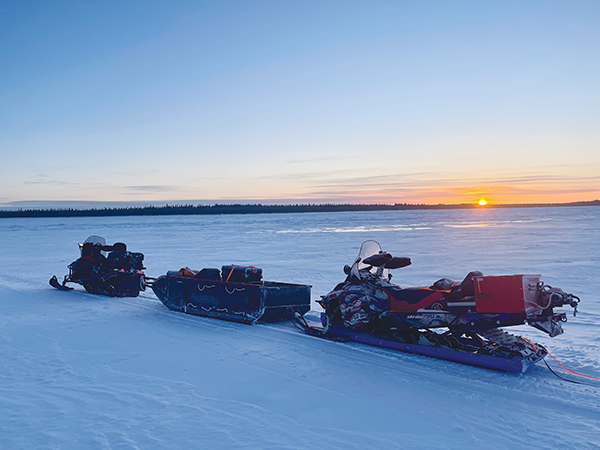
That sentiment has guided Brown through every role he’s taken on with the Iron Dog—the world’s toughest snowmobile race and one of Alaska’s proudest traditions. From competitor to President to his current position as Treasurer, Brown’s story mirrors the very essence of the event itself: perseverance, teamwork, and an unbreakable connection to the people who make it possible.
The Racer Who Became a Builder
Originally from Traverse City, Michigan, Brown moved to Alaska with a love of snow and a curiosity about the state’s signature sport. “I used to do a lot of mountain riding in the Alaska range,” he recalls. “But I’d always followed the Iron Dog. It looked like the ultimate adventure.”
For years, he admired the racers from afar—legends who seemed larger than life. But one year, sitting at the race banquet, something changed. “I realized these were normal guys with jobs and families and everyday issues. I talked to my son about it – at the time he thought I could do anything – and he inspired me. He told me, ‘Dad, you should do that.’”
So he did. Brown teamed up with longtime friend, Andrew Wessels, entered the race, and – despite nearly every rookie mistake imaginable—finished. “We did pretty much everything wrong,” he laughs, “but we made it. We crossed the finish line.”
They planned to race again the following year. But just a few months later, tragedy struck when his nine-year-old son died in a snowmobile accident. “My whole life revolved around him,” Brown says quietly. “It changed everything.”
What came next revealed the true heart of the Iron Dog community. “People I didn’t even know reached out,” he says. “They supported us. It was overwhelming—the amount of care from people who had no reason to do it other than kindness.”
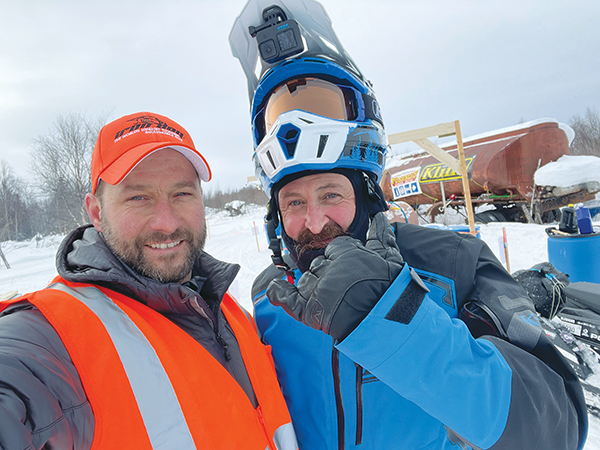
When the next race season arrived, Brown couldn’t imagine racing again—but he still wanted to be part of it. So he teamed up with his racing partner Andrew and volunteered. They helped mark trails, sometimes staking 280 miles of snow-covered terrain in brutal weather. “We weren’t racing,” Brown says, “but we could still do our part.”
What began as volunteering quickly grew into something larger. After a few years of helping wherever he was needed, Brown was asked to join the Iron Dog board of directors. “I knew nothing about the business side of a nonprofit,” he admits. “But I said I’d give it a shot.”
Within months, he was elected Vice President, and not long after, President. The race was in a difficult place—financially strained, short on sponsors, and lacking leadership. “It wasn’t in good shape,” Brown recalls. “We had no money, no executive director, and a lot of unrest.”
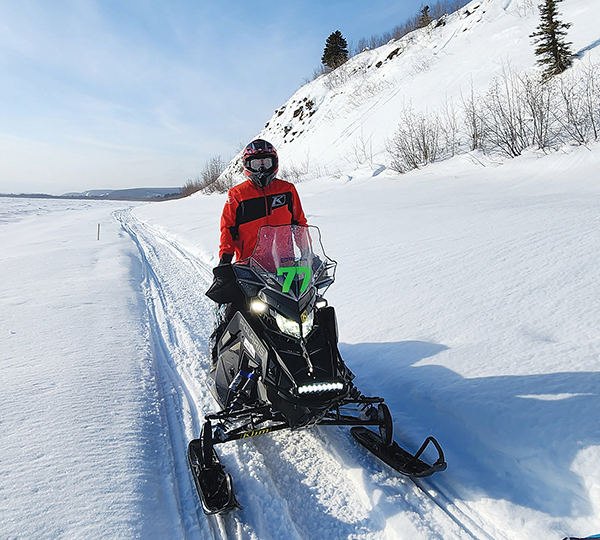
So the board went to work. They strengthened sponsorships, launched a youth helmet safety program, and navigated the unprecedented challenges of the pandemic.
“When COVID hit, a lot of people thought we couldn’t race,” Brown says. “But we decided early that we were going to find a way.” Working with local doctors and state officials, the Iron Dog developed a testing and travel plan that allowed the race to continue safely through rural villages with strict restrictions. “The fact that we had the race that year was huge,” he says. “It was something Alaska really needed. That was the turnaround year.”
The Heart of the Iron Dog
Over the years, Brown’s respect for the race has deepened—not just for the competitors, but for the hundreds of volunteers and residents who make it possible.
“The Iron Dog to these villages and towns is like the Super Bowl, Christmas, and the 4th of July all in one,” he says. “They’ve been cooped up all winter, and when the racers come through, it’s like the first day of spring.”
He remembers arriving at a checkpoint in the middle of the night, exhausted and lost after a storm, only to find locals waiting outside to cheer. “They didn’t know our names,” he says, “but they were there, waving and cheering us on. That’s what this race does—it brings people together.”
That sense of connection goes both ways. Racers often lend parts or repair help to other teams. Residents open their homes, cook meals, and offer their beds to weary competitors. “It’s hard to describe how much people give,” Brown says. “Some volunteers stay up all night, others haul supplies, some just make sure everyone’s okay. And none of them do it for recognition—they do it for pride.”
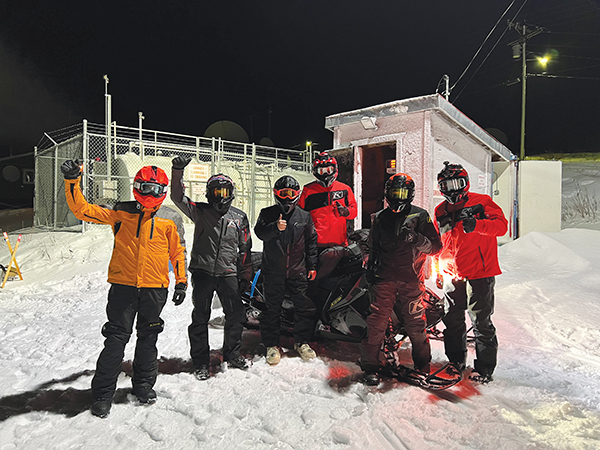
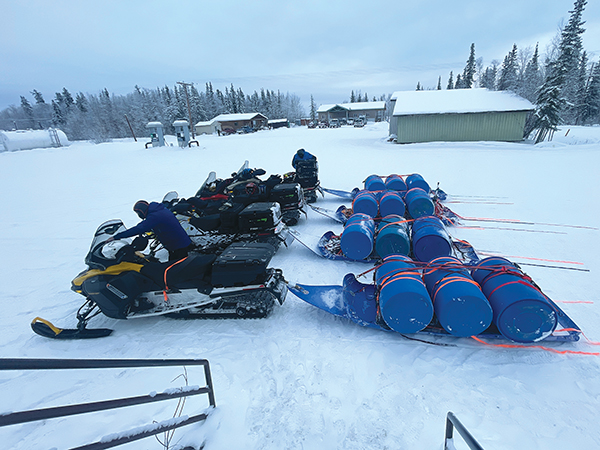
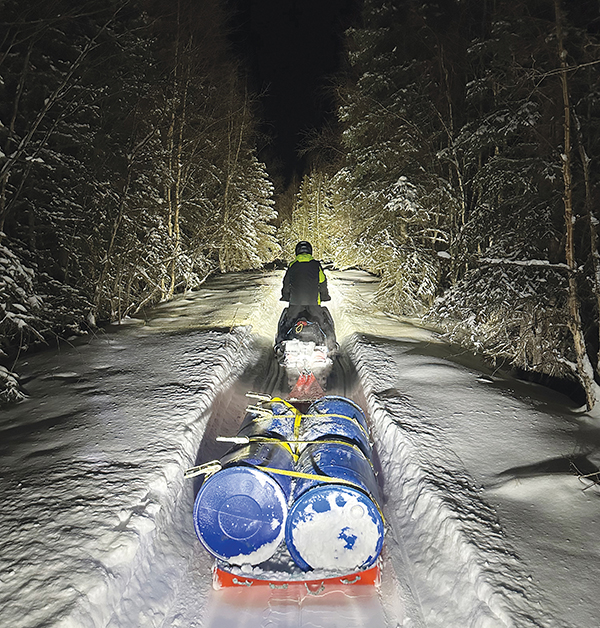
Each year, Brown still volunteers in the field, helping run the remote Poorman checkpoint and ensuring fuel is ready for racers. “We used to fly in drums of gas and pump it by hand,” he explains. “Now we’ve built a system with tanks to make it smoother and faster. It’s the kind of problem you only solve by being there.”
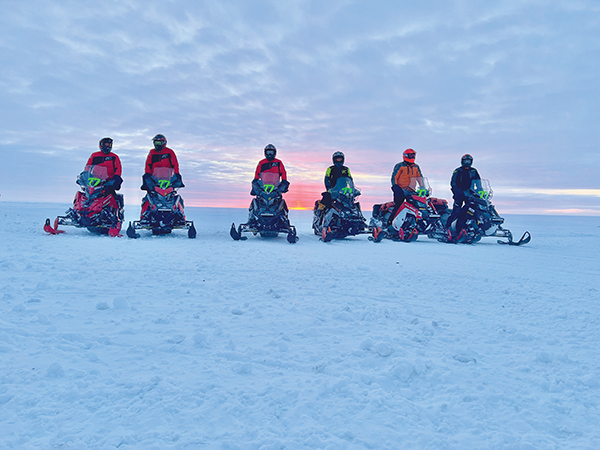
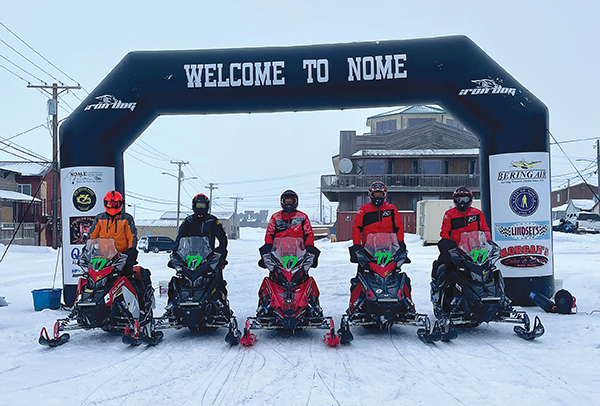
Brown estimates that between 250 and 300 people help keep the Iron Dog running each year—from the 20-some checkpoints along the route to the massive operations at the start in Big Lakes and finish in Fairbanks. “The amount of work it takes is astronomical,” he says. “And the pride people take in being part of it—it’s amazing.”
Over the last 8 years, Iron Dog, Inc. has expanded its community programs, donating helmets to kids, hosting safety workshops, and contributing to disaster relief efforts across Alaska.
“I do it for my own sense of pride, not for recognition,” Brown says. “And I think most of the volunteers feel the same way. It’s so much bigger than any one person. Being a small part of something that big is pretty awesome.”
Full Circle
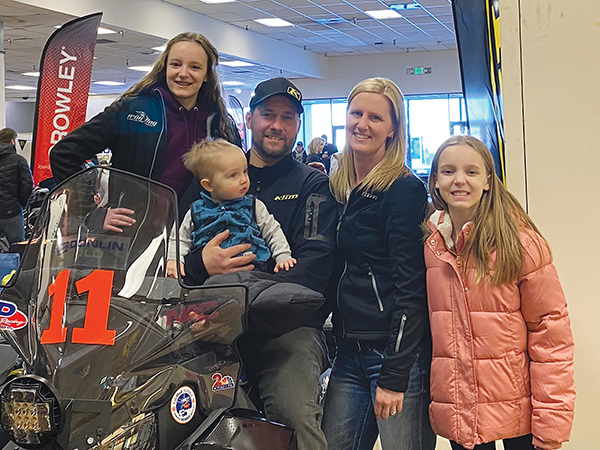
Today, as Treasurer of the Iron Dog board, Brown continues to work behind the scenes, ensuring the race’s financial health while staying closely connected to the people and places that keep it alive.
“Most fans have no idea who I am, and I’m totally fine with that,” he says. “I take pride in helping make it all happen.”
He still sees echoes of that first race—the thrill of the trail, the camaraderie of competitors, and the deep gratitude of the Alaskans who welcome them each year. And though his life took turns he never could have anticipated, his bond with the Iron Dog remains unwavering.
“You show up for this race as a nobody,” Brown says. “And before you know it, you’re part of a family that would do anything for you. That’s the Iron Dog.” •