
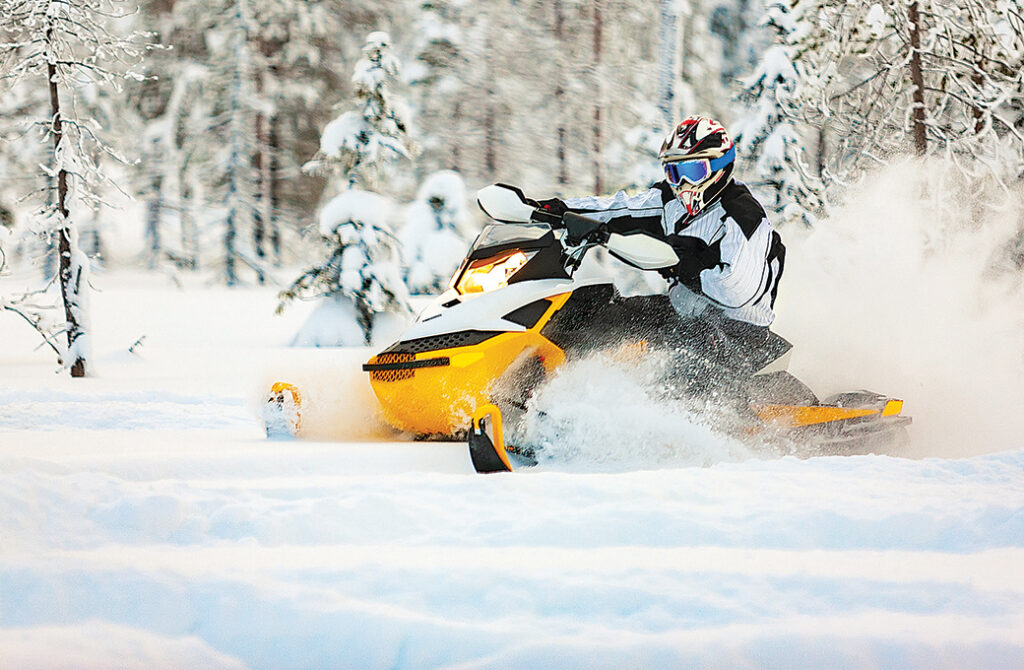
The issue of wheeled vehicles operating on groomed snowmobile trails is not new. This discussion began around 2008 with the Michigan Snowmobile Association (MSA) and continued with MISORVA. The legislation has been debated in the past is a direct result of a Land Use Order proposed by the Michigan Department of Natural Resources (DNR) to both the Snowmobile Advisory Workgroup (SAW) and the ORV Advisory Workgroup (ORVAW) around 2019.
That proposal brought long-standing concerns to the surface and initiated broader conversations about whether existing laws governing motorized recreation were still appropriate. MISORVA became a connecting point in this process — partially due to proposed changes from the DNR, and partially because users themselves were demanding improvements, clarity, and safer access.
Growth, Conflict, and Safety
With the rapid explosion of ORV use, conflict was inevitable. User numbers grew exponentially in a short period of time, while trail miles did not. During this growth, the DNR and legislators allowed dual-use trails with limited protections for groomed snowmobile trails.
The result was increasing mixed-use traffic, creating real safety concerns. The logic is similar to minimum speed requirements on highways — predictability matters. Mixed speeds, vehicle sizes, and traction types create unsafe conditions. This issue is fundamentally about safety.
PA 288 and Unintended Consequences
With changes to Public Act 288, more forest and seasonal roads were opened to ORV use. SAW was consulted on the anticipated impact. At that time, ORV use was relatively minimal, and there was no realistic way to forecast how quickly and dramatically it would increase.
As trail damage became more visible, concern escalated. For nearly a decade, motion after motion was passed at SAW meetings requesting a Director’s Order to protect volunteer grooming efforts by closing designated groomed snowmobile trails to wheeled vehicles during grooming season.
Volunteers at the Breaking Point — and Progress
Trail maintenance groups are tired — and they are volunteers. Over time, a majority of Michigan’s 67 grant sponsor groups made it clear that, unless action was taken to address wheeled-vehicle damage on groomed snowmobile trails, they were prepared to walk away.
That pressure has led to progress. Today, many dirt and snow clubs are now working together, recognizing that collaboration is necessary to sustain Michigan’s trail systems.
Who Pays — and Where the Pinch Is
Many snowmobile trails that would normally be inaccessible to wheeled vehicles in winter are now passable only because snowmobile trail permits ($52 each) pay to groom a smooth, icy base.
Some in the ORV community feel restricted, believing their 12-month season is being reduced. However, all other pathways and routes remain unchanged. The issue is limited to dual-use sections that are actively groomed.
Currently, the snowmobile program repeatedly pays:
• For multiple grooming passes to maintain a smooth base
• For materials and labor to repair rut damage caused by wheeled vehicles on a snow only trail.
If a trail is designated ORV or dual-use, yet the damage is clearly caused by wheeled vehicles during off-season use, snowmobilers are still paying for the repairs. That is the pinch point. If a trail is truly dual-use, both user groups share responsibility.
Why the Joint Association Formed
Snowmobilers supported the creation of a joint association due to increasing discomfort and safety concerns on groomed trails, and in hopes of a more cohesive approach to motorized recreation. Many ORV riders also supported this effort, with new members joining to advocate for balanced solutions.
However, a portion of the ORV community rejected the concept outright.
History Repeating Itself
The DNR has long tracked snowmobile fatalities, largely because snowmobilers were the first organized motorized recreation group and were heavily scrutinized. ORV fatalities are now also tracked, but reports often lack critical details such as vehicle type — dirt bike, ATV, or side-by-side — which can skew data and limit meaningful analysis.
Decades ago, the DNR “owned the woods,” and snowmobilers were seen as intruders. ORV use was minimal, and conflict was limited. Over time, motorized recreation matured. Snowmobilers, seeking summer recreation, embraced ORVs, and the DNR encouraged a simple concept: snowmobiles in winter, ORVs in summer.
As ORV equipment evolved, so did comfort, speed, and capability — leading to year-round use. ORV participation exploded. Trails became increasingly crowded, safety concerns escalated, and once again, trail mileage failed to keep pace with user growth. The combination of vehicle size, speed, and mixed traction created a dangerous environment.
The 2018 Director’s Order Proposal
In 2018, the DNR proposed a Director’s Order that would have closed all ORV access from December 1 through May 1. Both SAW and ORVAW rejected the proposal, citing major concerns:
• What about low-snow years?
• Why extend closures through May?
• Why such a broad, inflexible approach?
The Bottom Line
Snowmobile trail permits pay to groom trails. When grooming costs increase due to rut damage, snowmobilers absorb those costs. That inflation directly delays equipment replacement and long-term investments — equipment riders have already paid for and fought hard to secure.
At the end of the day, this issue is about:
• Protecting volunteers
• Protecting user investments
• Improving safety
• Ensuring fair responsibility
This is not about excluding any user group. It is about recognizing that mixed-use on groomed winter trails has real, measurable consequences — and addressing them responsibly.