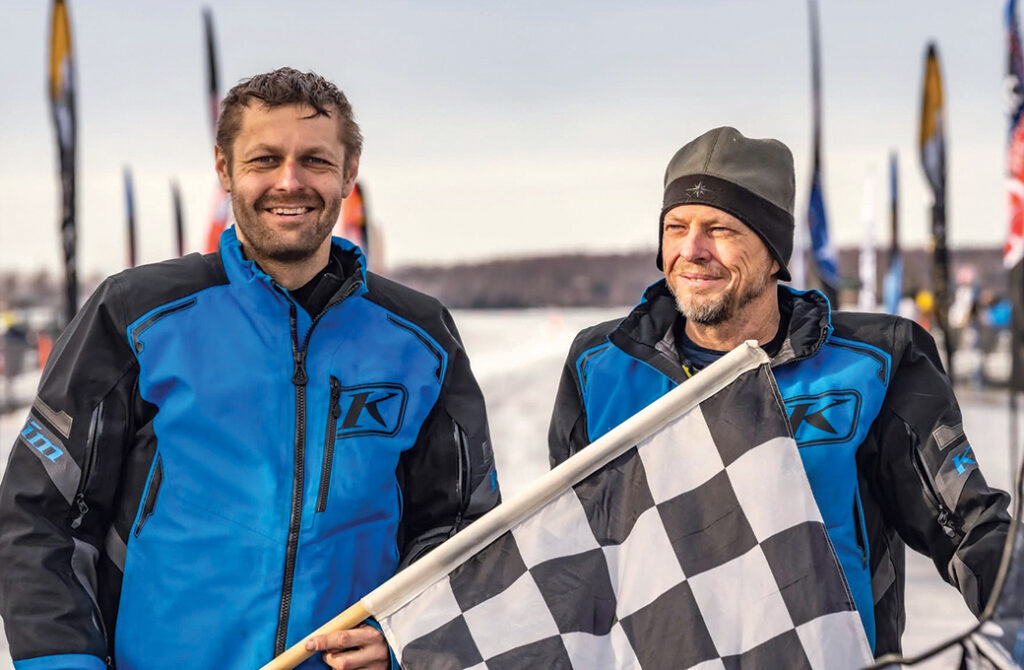
Eric Christensen and Alex Hetteen Tackle the Iron Dog
By Kim Kisner, Contributing Writer
The Iron Dog is not a race for the faint of heart. Across 2,500 miles of Alaska’s most brutal, breathtaking wilderness, riders face cold that burns, winds that batter, and terrain that can swallow a machine whole. For veterans, it’s a call to test their limits once again. For rookies, it’s a plunge into the unknown. And for those who dare, the race becomes more than miles — it becomes a measure of who you are.
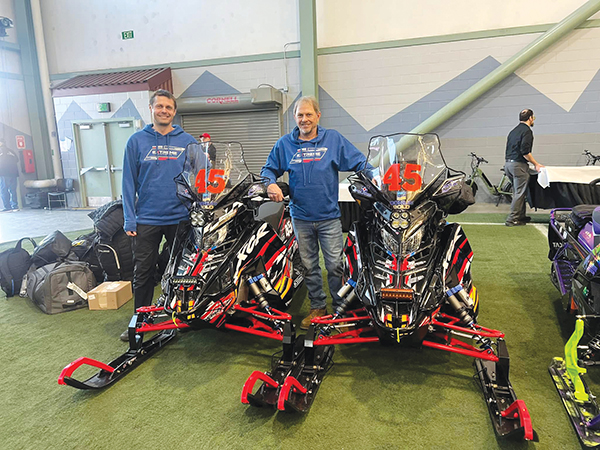
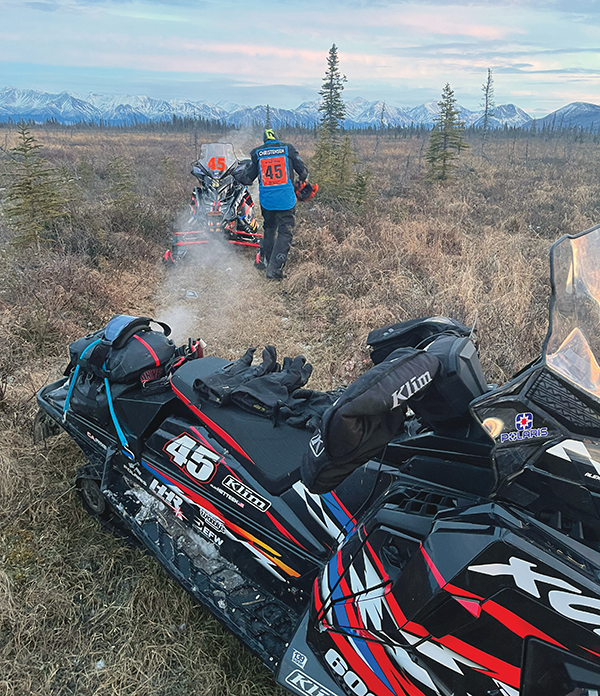
In March of 2025, Eric Christensen of Centuria, Wisconsin and Alex Hetteen of Roseau, Minnesota stood at the starting line with two different stories converging. For Eric, a veteran of the course and a past Polaris ambassador, Iron Dog was familiar ground — unpredictable, unforgiving, and addictive. For Hetteen, a Powertrain engineer at Polaris and longtime racer, 2025 marked his first attempt at the Pro Class. Their connection ran deeper than snowmobiles: Christensen’s grandson runs cross country on Hetteen’s team, a family tie that sparked a partnership built on trust, grit, and the shared Polaris name stitched across their jackets.
Different Paths to the Same Dream
Christensen’s journey to Iron Dog started years ago, not on the course, but in his imagination. “I’d been following the race since the ’90s,” he recalls. “Always something I wanted to do when I was younger but never had the chance.” In 2022, Polaris tapped him to join its ambassador program, riding halfway with other snowmobilers, handing out gear to kids, and fueling communities along the route. That experience lit the fire. By 2023, he was racing with another rider, learning the terrain firsthand from a local Alaskan.
Hetteen’s path was different, grounded in both work and passion. He and his wife have been racing together for over a decade, but the Iron Dog had always loomed as a nearly impossible feat for someone based outside Alaska. “It’s a hard race to get into, especially from down here,” he explains. When Polaris extended an invitation through its ambassador program to Hetteen’s wife she took the ambassadorship and he dove into the deep end, deciding to run the Pro Class. “I really wanted to do the race at the same time as my wife so we could experience it together, he said.
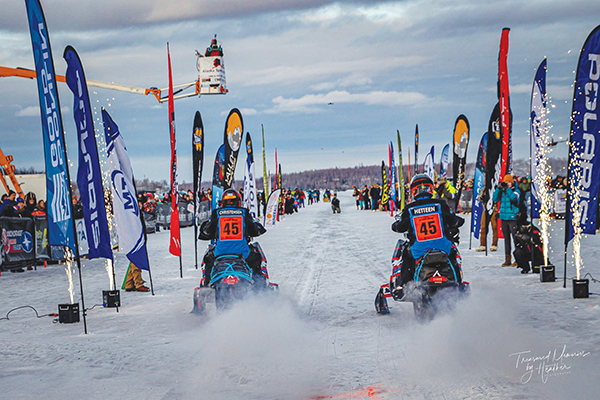
The decision for Christensen and Hetteen to ride together felt natural. Christensen’s experience paired with Hetteen’s engineering mind created a complementary team. And in a race where preparation can make or break you before the first mile, the duo leaned into their strengths. Hetteen handled much of the sled testing and tuning up north, while Christensen, hampered by two snowless winters at home, poured hours into physical training. “If you don’t have snow, you find some way to prepare,” Christensen says. “Weights, bike, tracker, gym time — anything to keep yourself ready.”
Ask either man what makes Iron Dog unique, and the answer isn’t just the distance. “You never know where you’re going to spend the night,” Christensen says. “In cross-country racing you have a schedule, a finish line, a plan. Iron Dog has so many unknowns.”
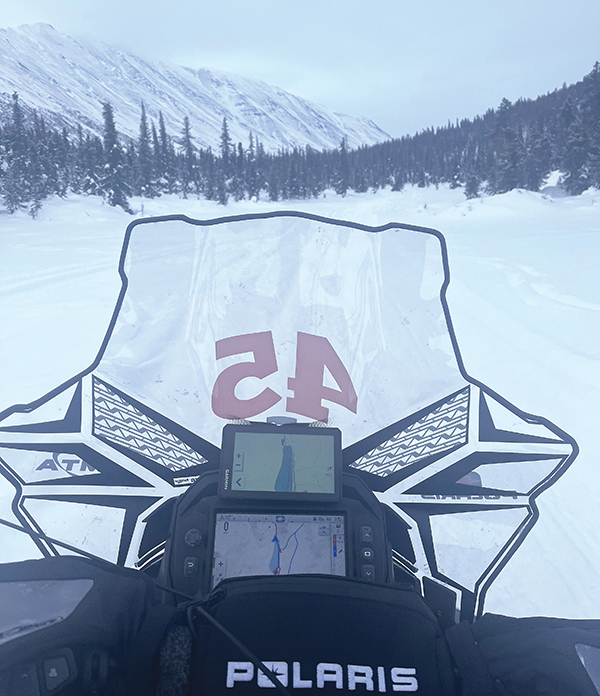
For Hetteen, it was the sheer time in the saddle and the logistics. “We didn’t have plane support, so everything had to be carried. The preparation is on another level.” Just getting their sleds to Anchorage meant crating them in St. Paul, trucking them to Seattle, and sending them by barge for five days before they could even begin the pre-race work.
Alaska’s Brutality and Beauty
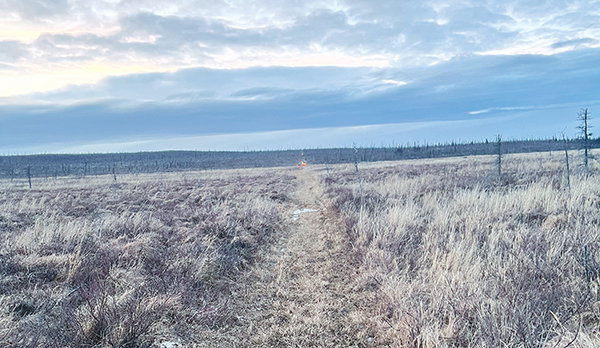
Riding in Alaska is an experience few from the Lower 48 can fully grasp. Christensen describes it as stepping off the grid in every sense. “Once you leave the start, you might cross one road. No cars, no light poles, no people. Just the environment.”
Hetteen remembers the rivers — deceptively thin ice hiding moving water beneath — and the shock of 70- to 80-mile-an-hour winds screaming into Nome. “Conditions could flip in a day,” he says. “Deep snow, then sketchy rivers, then more deep snow. The variety is like nothing else.”
And then came the Burn. For Christensen, it was hours of frustration as engine temps forced them to crawl mile by mile, turning what should have been a seven-hour trek into twelve. “It’s mentally tough,” he admits. “Knowing we lost four hours. Then thinking — how do we come back through this?” They regrouped in Nome, adjusted strategy, and shaved four hours off the return leg.
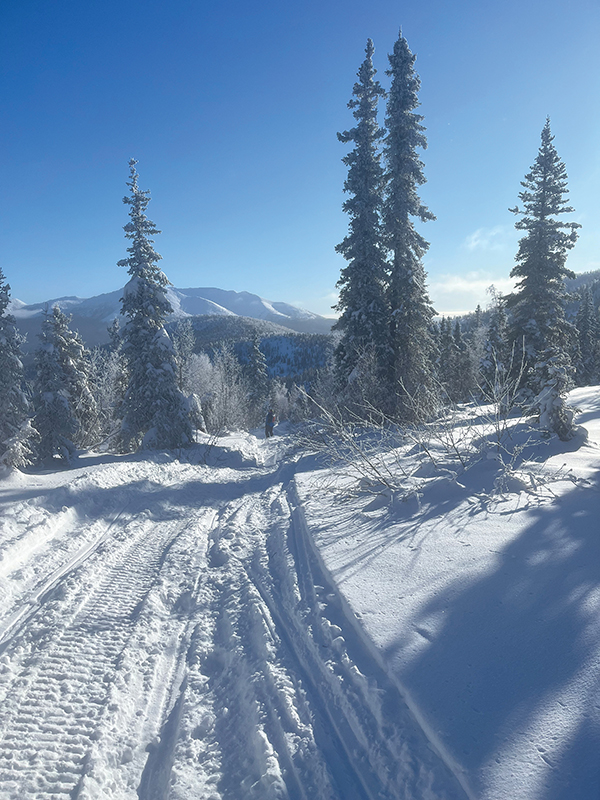
For Hetteen, the toughest moment came almost immediately: a crash on the first day left him with a cracked rib. “It was painful for the rest of the ride,” he says. “It was tough to sleep, hard to hit bumps, and we still had 2,000 miles left.”
Success in Iron Dog depends as much on sled prep as on skill. Their Polaris sleds were sealed tight against water intrusion, equipped with auxiliary GPS units, fuel tanks, windshields, radios, spare parts, and toolkits. “One of the most important things is sealing everything — keeping water off the belt when you’re on sea ice,” Christensen explains. Every detail mattered: lights, suspension tuning, storage for food and safety gear. In the Iron Dog, redundancy is survival.
Hetteen’s role at Polaris added another dimension. He was part of the team calibrating the very engines many racers rely on. That meant endless testing, tuning, and conversations with other teams, blurring the line between work and the race. “It’s personal,” he says. “You’re invested in every outcome.”
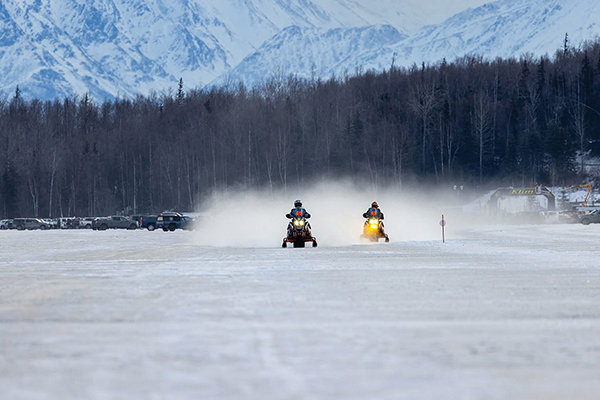
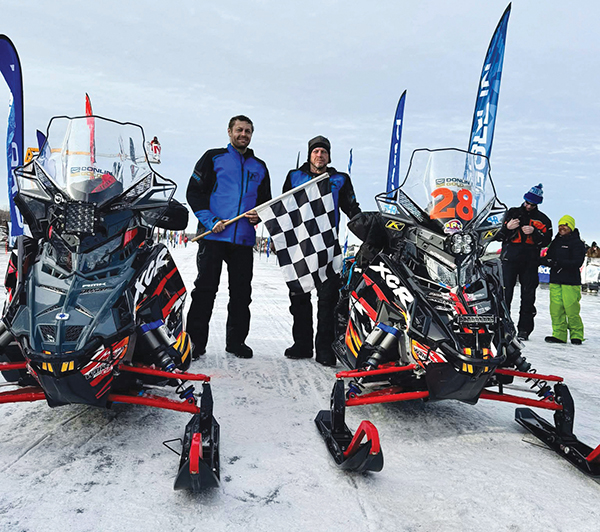
After the finish line, battered and exhausted, the question lingers: why do it in the first place?
Hetteen says the answer is simple: the challenge. “That’s the draw,” he says. For Christensen, it’s something deeper. “It’s how we’re wired. We’re snowmobilers. It’s what we do.”
They both describe moments of beauty that punctuate the pain: wildlife in the distance, a stretch of untouched wilderness, or the surreal peace of a minus-40-degree day, the sun cutting across the snow. “It’s not miserable,” Christensen says with a smile. “It’s actually, a good time on a snowmobile.”
Lessons for the Next Generation
Both men agree: for anyone considering Iron Dog, preparation is everything. Eric shares his wisdom with his nephew, who he’ll race with in 2026: focus on gear, wear only breathable shells, never overdress. Hetteen stresses suspension tuning, thorough preparation and learning from veterans. “Talk to people who’ve done it. Don’t waste time fixing preventable problems – prep the sled properly so you don’t have to fix things during the race in the middle of nowhere. And don’t crash.”
In the end, Iron Dog isn’t about conquering Alaska. It’s about confronting yourself — your patience, your pain, your preparation — and seeing if you can come out stronger on the other side. For Christensen and Hetteen, teammates bound by experience and resilience, 2025 wasn’t just about surviving the course. It was about living the essence of what the Iron Dog demands: to keep pushing, no matter what, because that’s simply who they are. •