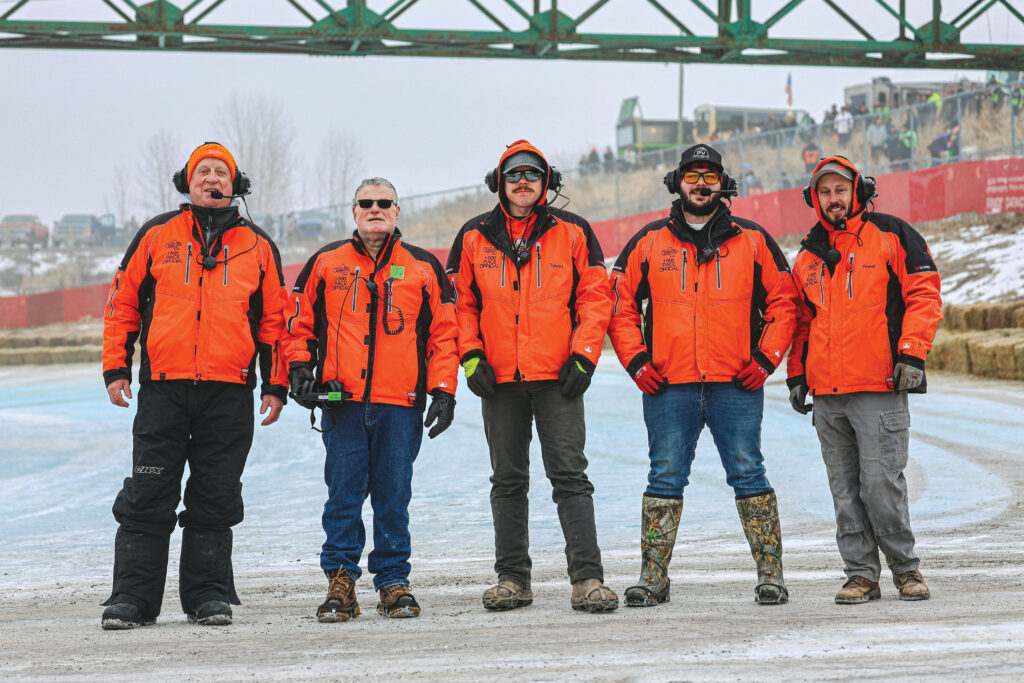
In recent articles I’ve written about volunteerism and various people who are involved with some form of volunteer participation helping to make the I-500 possible each year. Volunteerism IS without question the “back bone” of the International 500 Project. What’s unique about this project is, there isn’t another professional racing event anywhere that is operated and managed by individuals who unselfishly give their time and abilities while taking pride in volunteering. Let that sink in for a moment as you read on.
Volunteering in today’s fast lane society certainly isn’t what it used to be back when the I-500 was first organized. That being noted, I gotta tell ya folks, maybe times have changed and there’s a need to reinvent the positive benefits to volunteering in general. Regardless, what has kept the I-500 Project alive and successful for decades is the integrity of a special group of people that make up the International 500 family of volunteers.
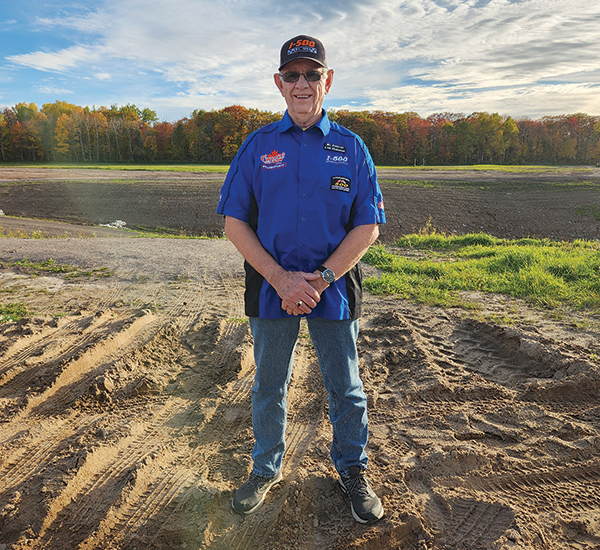
For over five decades the volunteers have pulled together to get things done so the I-500 is always ready for the invasion of fans and race teams alike. What must be done in preparations to host this world class spectacle would blow your piston if you know what it takes, believe me.
So, where did it all begin and who manages the massive number of volunteers involved each year?
Let’s back up a bit to the very beginning of this exciting and unique event. It all began with the group of guys who first introduced the idea of attempting to run a snowmobile 500 miles like the Indianapolis 500 auto race. They took their dream seriously and decided to take on the task of building the I-500 Project. At that time, it was a small group of people who simply reached out to friends, neighbors and relatives to help put their plan into action. After a couple winters of racing the project was showing positive interest and growth from both sides of the border. Progress towards making this event special each winter was gaining momentum. They realized they had to become more organized and committees were formed made up of volunteers to help spearhead the project. More time passed and long after the inception of the I-500 the group decided they needed to put together a Board of Directors to oversee the project in general and the committees as well. It was determined the I-500 would have one Board Chairperson and two Co-Chairs. These three titled officers would collectively manage meetings to maintain an organized atmosphere and progressive discussions benefiting the project.Each board member including the three titled officers would have to chair more than one committee. To this day, all I-500 Board members have multiple committees and committee volunteers to manage.
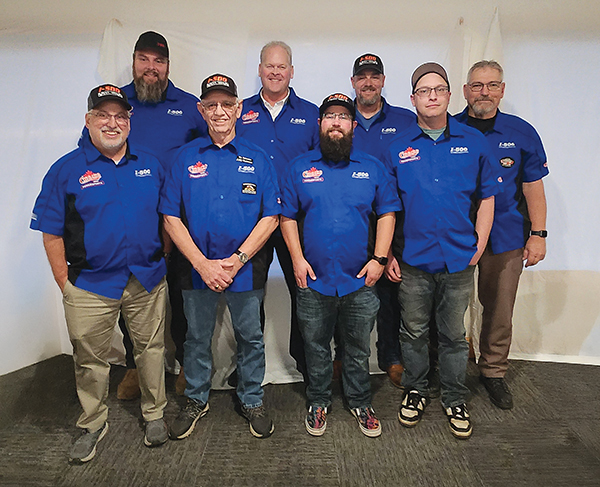
Back row: Wes Jourden, Dave Thomas James Kay Dan Burho
FRONT ROW: Ray Bell, Ric Federau Brent Kohn Ryan Kostonawicz
Since the formative years, there have been many volunteer members who’ve served on the board of directors with a true passion to continue striving to improve the event each year in every aspect possible.
The leadership from a board member perspective has always come from within the I-500 Project family of volunteers. People who’ve helped by volunteering, doing work on the track and other areas that need volunteer work to be done.
Enter the five decades of outstanding I-500 board members and quality leadership. All collectively with a shared vision for what they hope the I-500 will grow to be moving forward. The need for operating standing committees was formed and assignments given to board members who would direct their respective committee of volunteers towards accomplishing their committee objectives.
Throughout the years the past and present board members have passed projects on to one another that have improved the project in general making it a first class project, Every single board member who has served over the decades can take pride in the results of their long standing project committees and the people who’ve worked within them to achieve their objectives and goals. From the very first I-500 directors meeting directors assumed a huge responsibility towards getting things accomplished. It’s all the planning, managing of volunteers and yes… recognizing the importance of completing tasks while weather permits and time allows.
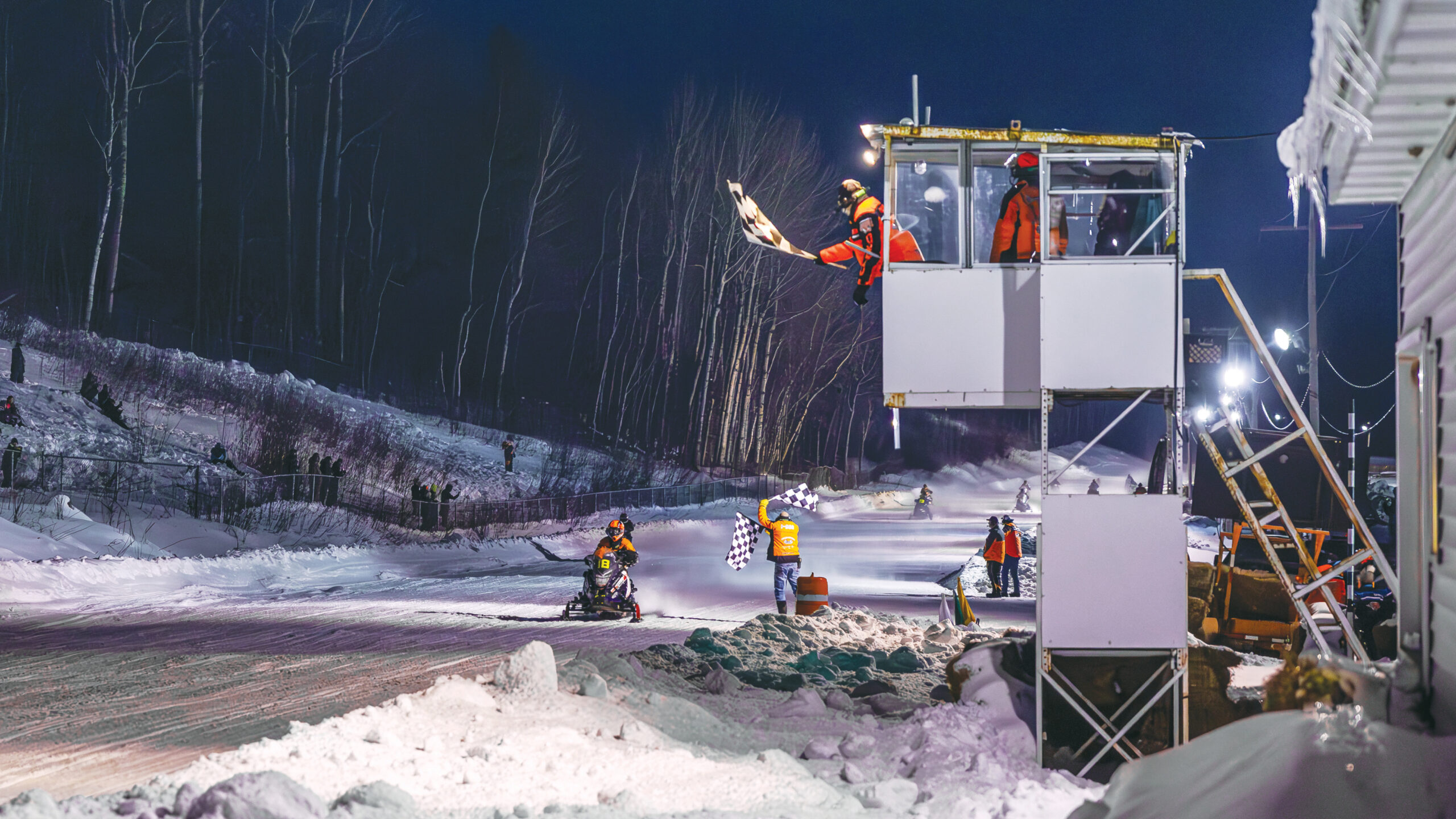
YOU as a reader can imagine all that goes into managing the most prestigious snowmobile race known to all winter sports enthusiasts on a global platform. All past I-500 board members and officers are to be commended for their efforts to host, manage and maintain a volunteer project of this magnitude. I’ll end this article by thanking the many volunteer board members who’ve served over the past 57 years of I-500 existence. Throughout the many years each board member has contributed to help make the International 500 what it is today.
Finally and certainly not least important is the fact that keeping the Canadian’s serving as partners is paramount. The relationship between volunteers from both countries is family strong. Currently there are two Canadian individuals serving on the International 500 Board of Directors.
It’s THANK YOU to ALL International 500 Board members who’ve served since the inception of this outstanding and unique racing spectacle known to many as the longest, fastest, toughest and most exciting professional snowmobile endurance race.
These directors past and present have historically been the glue that holds this volunteer project together making it the most prestigious and respected professional snowmobile race in the world. Hence, the International 500’s “5-P’s” for success.
PLEASE allow me to proudly introduce the current International 500 Project, Inc. Board of Directors.
Take a bow, y’all….
“It’s all left turns from here”……. Always the first Saturday in Feb. each year, ALWAYS!
For additional I-500 information including volunteer and sponsorship participation, visit our social media site: www.i-500.com •
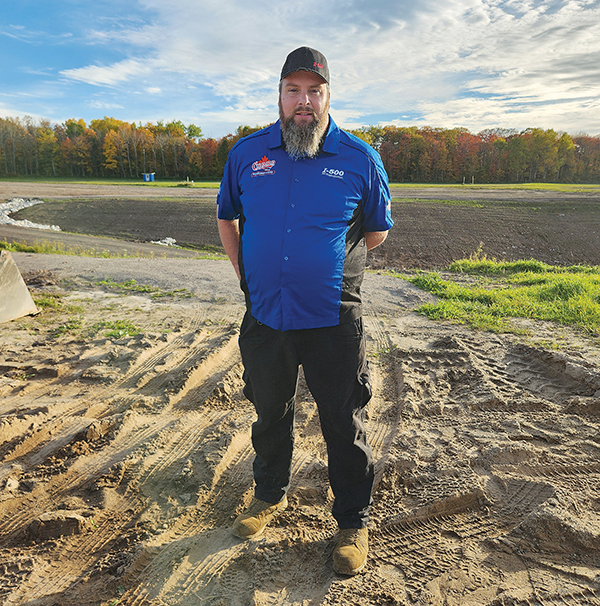
Wes Jourden
Current I-500 Roles: Safety & Security Director, Information Technology Director, Volunteer Coordinator.
What attracted you to the I-500?
There was an article in the Sault Evening News in December of 2002 asking for volunteers to come to help build the track. I called the number on that ad and got paired with Greg, Burch, Terry & Plumber and learned how to build the track, watering the track.
What Year was your first year as a Volunteer and the first year you got on the board of directors?
The first year as a volunteer was December 2002. Back then, I drove a Chevrolet S-10, which was only rear-wheel drive. We would park down next to the small watering shack we had, and the hill down to the track is only salted or sanded on race morning, so some days, trying to leave when we were done watering at night was a challenge to get to the top of the hill, only being rear-wheel drive, and the hill would be slippery. My first race was the 35th Race held on February 1st, 2003. I was standing out in the crowd.
After the race, I didn’t know about a workers’ party or anything of that sort, and communication back then wasn’t the greatest. So, I just went on with our lives, and then in the fall we would all get back together and start preparing for the next year. I would always see a bunch of vehicles show up on some Thursdays when we were building the track. It was people coming to the board meetings.
In December of 2004, I began attending Board Meetings, and I was appointed to fill a vacancy on the board in October of 2005, which, for those years, I oversaw the office, information technology items, did track construction, and assisted with media relations. For all of these years I lived about 20 minutes away from the track. Then, in 2010, I moved out of the area to the Marquette area, which is 3 hours away from the track. In 2010, I resigned from the board but remained a volunteer and would take a week off work and pay my own hotel, and stay in the Sault for race week and volunteer. In 2017, I was re-elected to the board of directors of where I remain today. Today I still reside in the Marquette area, and make the 3 hour drive to the track for meetings. Then I roll into Sault Ste Marie usually 10 days before race day, and oversee all of the off-track setup.
Being a board member for the I-500, what is your favorite part of race week?
I have two absolutely favorite parts. The first one is Saturday, Race Morning, in the few minutes after we go green at 10 am. At that point, everything is working exactly as it is supposed to. Typically, for the first hour or so, there are minimal troubles or difficulties to work through, and everything is easy for a short time. The second favorite part is the Monday after race week, when everything is taken down, put away, and I am usually still at the track, doing the final few things.
What is your fondest memory during your time serving as an I-500 Board Member?
In 23 years as a volunteer and 13 years as a board member, there have been a lot of memories. I have gotten to meet some amazing people, including Senators, Representatives, Governors, Veterans, Racers, and more. The stories they tell are most memorable. I have seen so much for so many years; I have seen families grow up at our event. Even my own son began attending race week in 2019 at 11 years old. Every year, he would take 2 weeks off from school and attend the race and volunteer for race week. For 2019-2025 with the exception of the COVID year, when we didn’t have a race. I have seen this track change greatly in all of the years I have been around.
Thinking back to 2001, when I answered that newspaper article. The property looked quite different then. Back then, timing was only a small timing building and did not have tech as part of it. Tech was in a separate building that was located where the pit food trailers are now. The watering shack was a single-story shed with a wooden bench, a fire hydrant, a fridge, and a small heater. The maintenance building had a dirt floor, which was a mess to work with. The top of the bunker was the old lap counting building and was where the track building crew would watch the race on race day. In 2011, it was converted to VIP space. Then the press center was a single-story building up on poles. In 2013, during a rainfall event, the building slid down the hill and had to be demolished. The new building began construction in 2015 and was first used in 2018. In 2024, the parking lot was expanded, and in 2025, the steel structure was added where the vendor tent once was, and the parking lots were expanded further. There is not a single fond memory, but many over the years, and more are being made daily.
As an I-500 board member, what aspiration do you have for the future of the I-500?
Seeing where we were 22 years ago to where we are today. I am always trying to expand our capabilities and thus make our experience even more enjoyable. This is in part by modernizing our processes and capabilities. A lot of times, these additions seem small but have a huge impact. Some of these expanded capabilities that I have added include, first, installing race results monitors in 2009, upgrading that system in 2018, website / online registration integrations, Facility Surveillance system installed in 2024 to discourage break-ins. FLO Sports live stream was expanded to the Beer Tent in 2025.
Future projects planned include installing fiber-optic connections between buildings, updating access point controls, and expanding facility surveillance capabilities. Updating of Volunteer and Safety Team Support facilities and more. I look forward to all we can accomplish and how different will things will look 20 years from now. •