Kim Bergeron on the Pull of the Iron Dog
By Kim Kisner, Contributing Writer
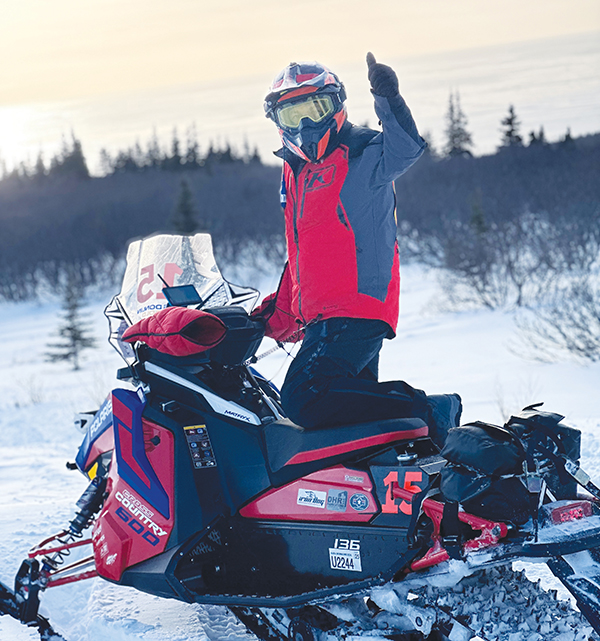
Kim Bergeron never set out to be the kind of man who measured his life in miles across frozen rivers and desolate tundra. His snowmobiling story began simply: carving a trail so his son and daughter could ride to school and back. But years later, that simple act has carried him into the heart of the longest, toughest snowmobile race in the world — the Iron Dog.
“I didn’t see this coming back then, but now it’s in me,” Bergeron says. “It’s who I am. I’ve raced motocross, I’ve volunteered in countless snowmobile associations, but the community around the Iron Dog is unlike anything else.”
That passion has carried Bergeron across two decades of expedition rides and volunteer work. And it has carried him through heartbreak, rescue, and redemption in back-to-back Pro Class attempts that tested not only his skill and stamina, but his very resilience.
A Cold Baptism
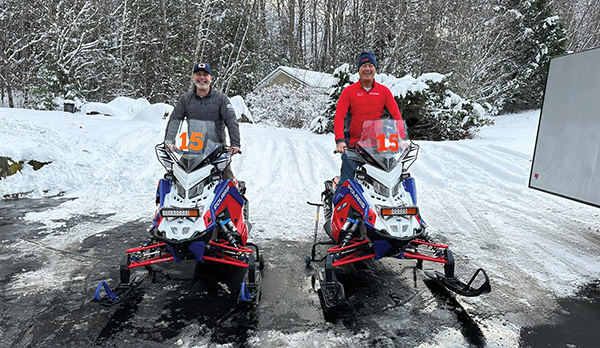
In 2024, Bergeron and his close friend JP Bernier — both from New Hampshire — decided it was time to take the leap into Pro Class. They had ridden the Expedition several times. They had volunteered. They had dreamed. Now, they were ready.
For nearly 2,500 miles, Team 15 fought through deep snow, ground blizzards, and the kind of unpredictable terrain that makes the Iron Dog legendary. But just 206 miles from the finish, disaster struck.
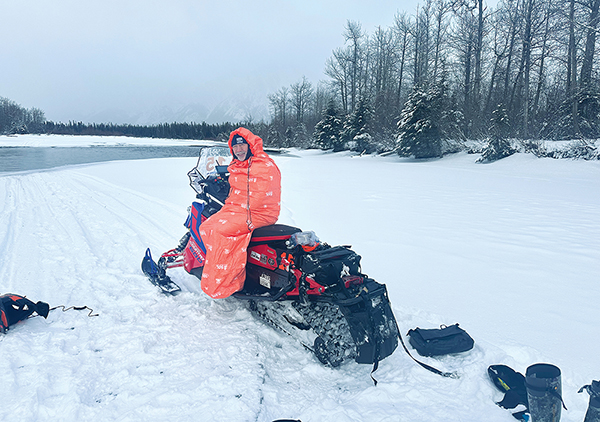
On the South Fork of the Kuskokwim, swollen by an unusual rain event, Bergeron’s sled went under. He cut the engine as the machine sank into seven feet of freezing, fast-moving water. Suddenly, the race wasn’t about placement or pride — it was about survival.
“The water immersion self-rescue kicked in and JP was ready,” Bergeron recalls. “When in freezing water like that you have ten minutes to get out and get dry. I caught my breath and swam toward a berm. JP threw me a rope and pulled me out.”
Shivering uncontrollably, soaked, and miles from shelter, Bergeron relied on the support of fellow racers Kodey Worley and Blake Elder, who declared a safety and got them to refuge. That moment crystallized something Bergeron already knew: the Iron Dog is as much about community and friendship as it is about competition.
“I’ve raced all over, but you don’t see this anywhere else,” he says. “The Alaskan community wants everyone to finish. They’ll give you their machines, their gear, their time. That’s the heart of this race.”
Redemption in 2025
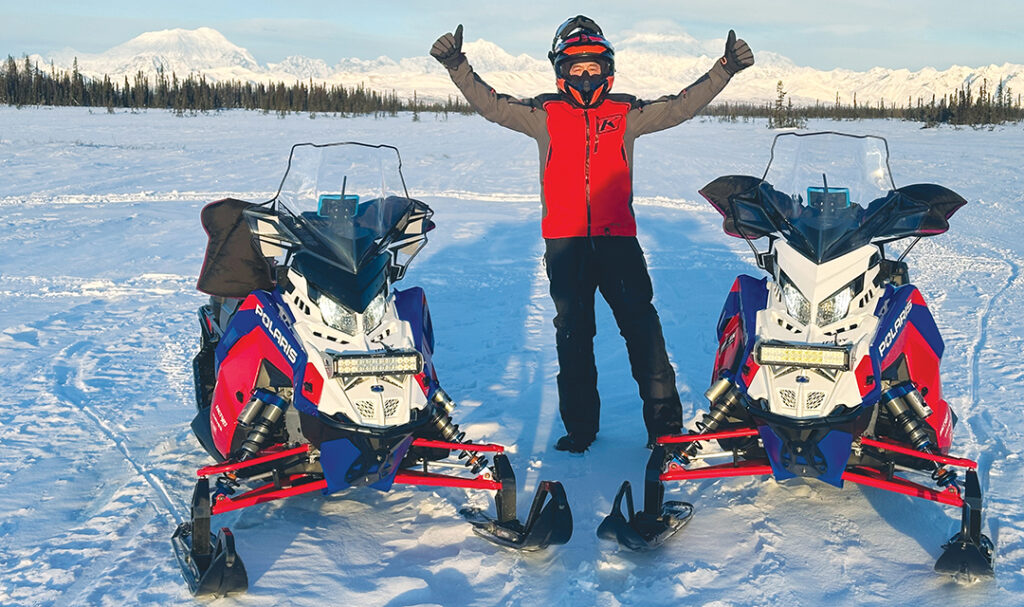
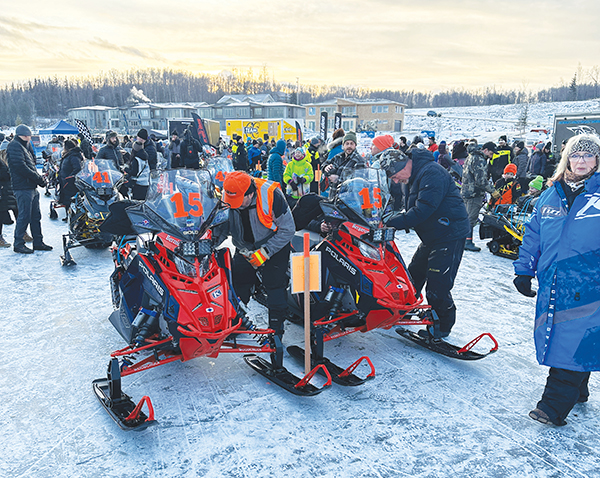
The failure of 2024 could have marked the end of the story. Instead, it lit a fire. Bergeron and Bernier returned in 2025, determined not to quit. This time, they had Polaris sleds prepped by 2024 champion Brett Lapham — a major advantage that eased the logistical burden and allowed them to focus on racing.
The race was still brutal. Ground blizzards. Water skips. Endless hours in the saddle. But this time, they made it.
When Team 15 crossed the finish line, they weren’t at the top of the leaderboard. In fact, they were last. But in the Iron Dog, last has its own honor.
Bergeron and Bernier were awarded the Red Lantern — the prize for the final team to complete the course.
“To some people, it might mean last place,” Bergeron says. “To me, it means never giving up. It means proving to yourself, to your partner, and to everyone watching that you have the grit to see it through. That’s a badge of honor.”
For Bergeron, finishing wasn’t about the clock. It was about closing a loop, rewriting the ending that had been stolen by the river a year earlier, and embodying the Iron Dog’s spirit of endurance.
Words for What Can’t Be Described
When pressed to describe the race, Bergeron’s language spills out in fragments, each word a window into the experience:
“Scary. Fast. Majestic. Incomprehensible. Fulfilling. Strength. Gratitude.”
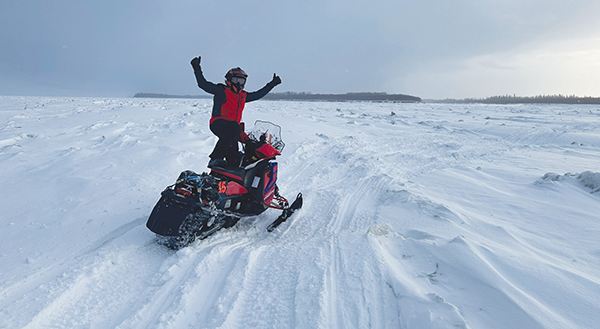
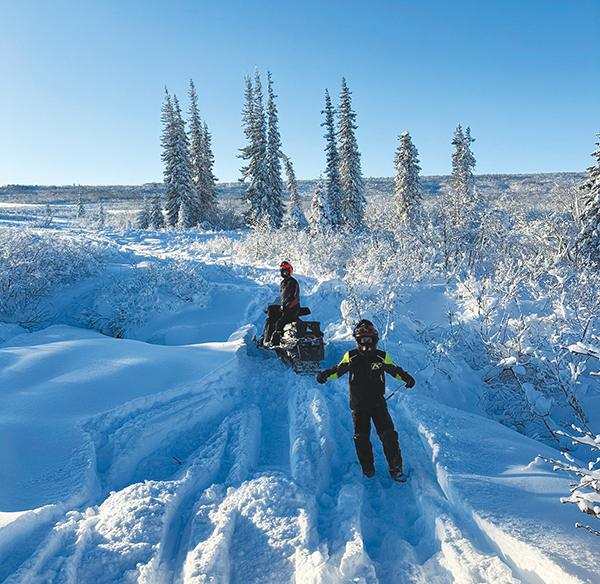
He tells of flying across 11 miles of crystal-clear ice at 97 miles per hour, the sensation unlike anything else. He tells of blizzards so blinding that survival depended on instinct and trust. He tells of meals shared in remote villages, volunteers turning rough trails into passable paths, and the endless generosity of Alaskans who treat racers like family.
“I’ve never experienced anything like the it,” he says. “It’s why I keep coming back.”
Looking Ahead to 2026
The Red Lantern finish in 2025 came with a prize: free passes for 2026. Bergeron and Bernier plan to use them, determined to race smarter, stay steady, and aim for a top 10 finish.
For Bergeron, the race is no longer just a challenge. It’s a way of life.
“About 50% of teams don’t finish. But if you’re steady, if you’re smart, you can. That’s what I believe. And that’s what keeps me going.”
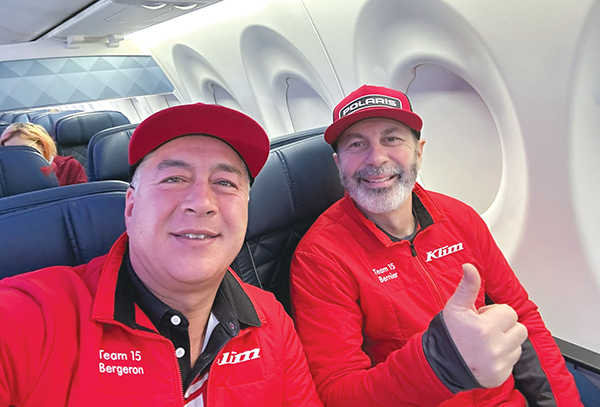
More than results, Bergeron is driven by the pull of the trail, the bond with his partner, and the unmatched embrace of the Alaskan community.
“People ask me why I do it. The truth is, it’s just in me,” he says. “It’s who I am now. And I’ll keep coming back as long as I can.”
In the Iron Dog, stories are written not just in miles, but in moments. For Kim Bergeron, two moments define his journey so far.
The first: a rope, thrown by his partner JP, dragging him from freezing water and pulling him back to life.
The second: a lantern, glowing red, placed in his hands at the finish line a year later, symbolizing endurance, resilience, and a race completed against all odds.
Between those two moments lies the essence of Bergeron’s passion — a story not of podiums and trophies, but of perseverance, community, and the unshakable truth that some things are simply “in you.” •